over time what will happen to the populations of light and dark moths on light trees
Daily Do
How Did The Moth Population Change?

Introduction
Today's task, How did the moth population change?, creates an opportunity for students to look at examples of how different factors impact shifts in organisms population. Students engage in science and engineering practices - including the utilize graphical data - to figure out why some populations may shifts over fourth dimension.
This task has been designed in order to be used by students, parents, and teachers in altitude and home learning. While older students could consummate this task independently, we encourage younger students to work nigh with peers or in the home with family members.
Presentation of Phenomena (What am I exploring today?)
Documenting populations are washed for many reasons. State agencies, environmentalists, and many others go on track of populations of both plants and animals to ensure that the ecosystems within an area stay salubrious. When a dramatic shift happens in a population it often raises questions well-nigh what is going on. For today'south Daily Exercise we will explore the shift in a population of moths to try to figure out what is going on in the ecosystem to cause such a dramatic shift in population.
Guidance: Students-as-scientists have on the office of biologist. The goal is to get students thinking about patterns they are seeing in the data to generate investigative questions about the dramatic shift in population. Presenting a phenomenon and asking students to generate questions about it creates a need to effigy out the answer to those questions. This is authentic engagement and a powerful learning procedure (unlike "learning almost" populations and ecosystems).
Experiencing the Phenomenon:
Have students analyze the data below. Ask students to tape what they notice about the population. Our goal hither is to promote student thinking around the scientific discipline practice of analyzing and interpreting information. Side by side, ask students what patterns they notice in the data and have them record whatsoever questions they take about the moth data. ALL student questions are okay at this point. Our goal is to motivate curiosity and not distinguish between "skillful questions" and "bad questions" or "right questions" and "wrong questions". Common questions will arise for almost students, which is what this task builds on.

Investigative Questions (What questions do I take about what I merely saw?)
Investigative questions are mutual questions kids may ask subsequently they are introduced to the phenomena. Although questions may vary, many students are curious about what is going on with the moth population and why it shifted so dramatically.
Guidance:It is important to allow fourth dimension for thinking. Many students have ideas and questions but need time to codify their idea or question into words. Some students may besides do good from writing things downwardly first before they share. As adults we may be tempted to give them questions we feel might be important to explore, notwithstanding, we need to refrain from this and allow our students to practice request their own questions. Our goal here is for students to consider all of the different factors that may take noticed before but never really idea almost.
Mutual Questions:
- What happened to the light-colored moths?
- Did the calorie-free-colored moths get a disease?
- Did the dark-colored moths showtime having more than babies?
- Practice the moths live in the same place?
- Will the moth populations shift back?
- Are the moths different colors of the aforementioned species?
- Exercise the moths eat the aforementioned things?
Students may make connections to previous concepts depending on their grade level. For case, simple students may mention that moths come up from a caterpillar so maybe something is happening to the caterpillars. Middle schoolhouse students may know that there are different interactions that can happen within an ecosystem that can cause a shift in the population of an organism. Other things students may mention are there are things that consume both caterpillars and moths, there are chemicals that people use to kill insects, and that there are several things that all animals need to survive.
Student Ideas and Background Cognition
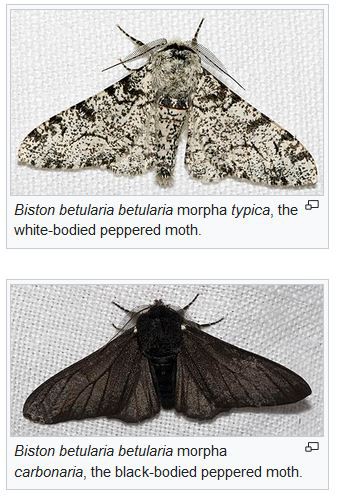
Based on our initial questions, we think we demand to figure out some things most these light- and dark-colored moths. Why is there a difference in their appearance? First, here are some basic things we demand to know about them:
- Dark-colored moths were considered rare since they were not seen as often as light-colored moths.
- The moths we are studying are calledpeppered moths.
- The moths are different colors of the aforementioned species.
- The moths live in the aforementioned surface area, in this case England (belatedly 1800s to early 1900s)
Guidance:The information (bulleted items) above tin exist shared with the students or students could practice some basic research about peppered moth. You might also share this commodity, Peppered Moths, with students.
Brainstorming Ideas
Guidance:Brainstorming is a great way to go students thinking and collaborating. If you are doing this at dwelling, try a brainstorming discussion to get ideas out. If you lot are doing this with a grouping of students have them brainstorm independently first then share their ideas with a partner or small grouping.
Ask students to begin ideas virtually what they think might exist happening that would cause a shift in color inside the moth population. Common ideas include:
- White moths are getting a disease and dying.
- There is not enough nutrient.
- Something is eating the white moths.
Prompt students to think virtually the population of moths as a whole, using questions such as:
- If the moths are the same species do we think a disease would only affect the light-colored ones?
- If both light- and dark-colored moths alive in the aforementioned area would a nutrient shortage simply bear upon some members of the same population?
- What idea would exist the easiest to investigate?
Enquire students which idea nosotros should investigate. Students volition likely say nosotros should figure out if something is eating the light-colored moths.
Conducting an Investigation
Tell educatee that birds eat moths so to help us figure out what is going with the moth population you are going to gather some data. Have students engaged in the Brindled Moth Simulation in guild to get together some information on calorie-free moth and night moth populations.
After each game have students record the summary percents of low-cal moths and dark moths which appear in a black text box when the game is complete. Ask students to create a data table or t-nautical chart to keep their data organized.
Have students play at least 2 rounds in each of the colored forests (more rounds are better if there is fourth dimension). If you are doing this as a grade, consider having students share their data every bit part of a class information nautical chart.
After the data has been nerveless, accept students place any patterns they detect. They should discover that dark moths on low-cal trees become eaten at a higher percent than light moths on light trees and vice versa.
Taking Stock
After looking at the patterns in the information, appoint students in a "taking stock" discussion. Ask students what they know about the moths and so far that would help them effigy out the lesson question.
- Both light- and dark-colored moths live in the same area.
- Both light- and dark-colored moths are eaten past birds.
- The moths are dissimilar colors of the same species.
- Some moths seem to alloy into the environs better than others.
Have students discuss their ideas about why the population is shifting. Students will virtually probable say that the population is shifting considering birds are eating the light-colored moths instead of the dark-colored ones.
Side by side, inquire them why? Why would birds of a sudden switch? Ask students what else could be going on in the ecosystem to crusade this shift? Accept students share their ideas.
Subsequently students share their ideas, have them read Natural Selection, which provides more data virtually the moths and where they lived.
Making Sense - What did we effigy out?
Take a give-and-take effectually the question,What did we figure out from the reading, and how does it aid upward explain the data we analyzed at the commencement of the lesson?
During the discussion, students should demonstrate they accept figured out:
- Both moths were represented in the population but nosotros think the dark ones were getting eaten at a higher rate.
- When the environment changed, due to pollution, the moth population shifted considering light-colored moths became easier to run across so they were eaten more often.
- Organisms that survive take a better chance of reproducing so the population continues to abound.
- Human being actions affect other populations
Final, have students think about how human activities go along to alter environments. Inquire students to think nearly how human actions touch on populations of plants and/or animals in the area where you live.
Some organisms students can research include:
- Monarch Butterflies
- Asian Carp
- Big Horned Sheep
- Milkweed Plants
- Elodea
- Zebra Mussels
- Oysters
Y'all may also similar
Source: https://www.nsta.org/lesson-plan/how-did-moth-population-change
0 Response to "over time what will happen to the populations of light and dark moths on light trees"
Post a Comment